


What Is Yerba Mate? The South American Energy Ritual That Science Is Finally Catching Up With
This article discusses emerging/ongoing science and research. It is intended for general informational purposes only. This content is unrelated to products offered by Organixx and does not contain any representations about the performance of such products.
In a hurry? Click here to read the Article Summary
For centuries, people across South America have started their days with a ritual that is equal parts energizing and communal. They didn’t have the peer-reviewed research to explain why it worked so well. Now, increasingly, we do.
The drink is yerba mate. And if you’ve heard the name but aren’t quite sure what it is, where it comes from, or why it’s attracting serious attention from nutritional scientists, you’re not alone. This is one of the oldest botanical traditions on Earth – and one of the most biochemically interesting.
A Ritual Older Than Written Records
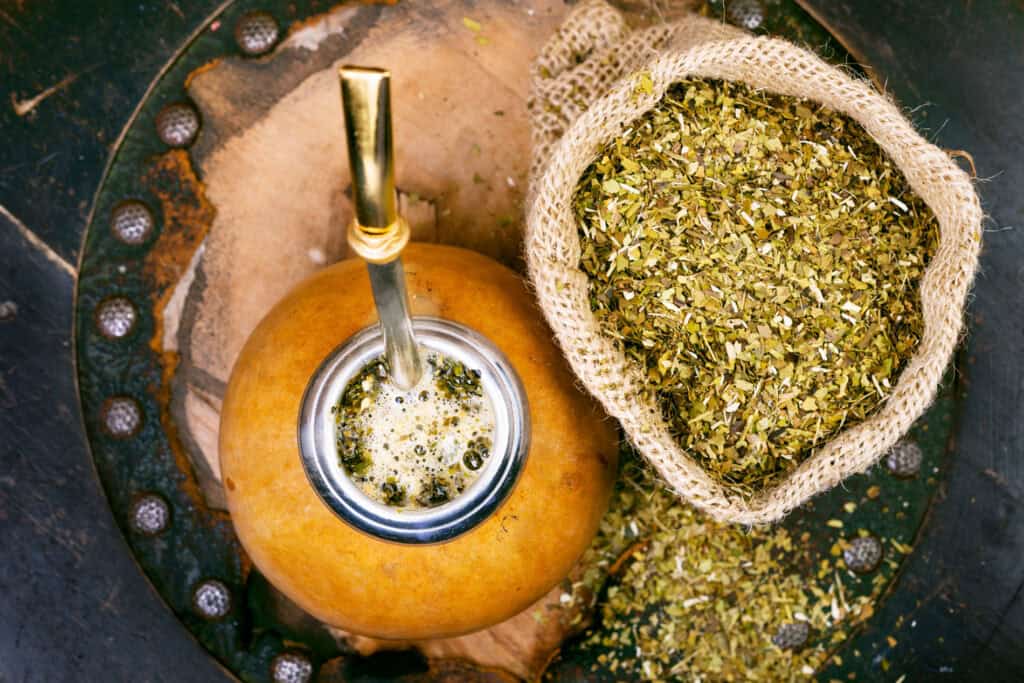
Imagine starting every morning not with a rushed mug grabbed on the way out the door, but with a deliberate ritual – warm vessel in hand, a few minutes of quiet intention, and an energy that builds steadily rather than spiking and crashing before noon. No jitters. No slump. Just sustained, clear-headed alertness that carries you through the day.
For hundreds of millions of people across South America, this isn’t a wellness aspiration. It’s just Tuesday morning.
Yerba mate is prepared from the dried leaves of Ilex paraguariensis, a native holly tree found in the subtropical forests of South America. The indigenous Guaraní peoples – who inhabited what is now Paraguay, northeastern Argentina, and southern Brazil – had been consuming it for well over a thousand years before European colonisation. They called the plant Ka’a: “the tree that nurtures.” This wasn’t a recreational drink. It was a daily source of physical and mental sustenance – so woven into the fabric of Guaraní life that when Spanish colonists arrived in the late 16th century and initially dismissed it as a native indulgence, most had quietly adopted the practice themselves within a generation. The effects were simply too good to ignore.
Here’s what’s striking: millions of people, across centuries, kept reaching for this specific plant every single morning. Not because they had clinical trial data. Because it worked – consistently, reliably, differently from anything else available to them. The science that now explains why it works is relatively new. The daily human experiment that confirmed it does? That’s been running for over a thousand years.
What Makes Yerba Mate Different From Other Caffeinated Beverages?
This is where it gets interesting.
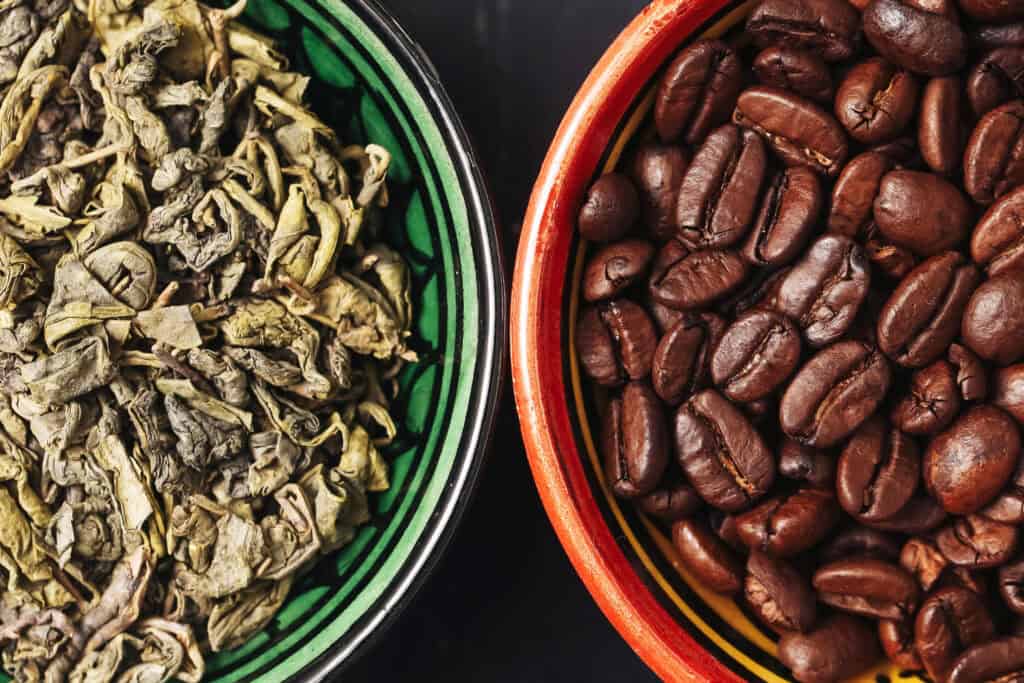
Most caffeinated drinks are essentially a one-trick pony. Coffee gives you caffeine, and caffeine gives you a lift – sharp, fast, and for many people, followed by an equally sharp comedown. Yerba mate contains caffeine too, a meaningful amount of caffeine, broadly comparable to a cup of coffee depending on how each is prepared. [1]. But caffeine is only part of the story.
What makes yerba mate genuinely different is everything that comes with it.
Theobromine – the same compound found in dark chocolate – is perhaps the most important one most people haven’t heard of. It’s a natural, milder stimulant that works more slowly and lasts longer than caffeine. Rather than hitting you all at once, it builds gradually and fades gently. In practical terms, it takes caffeine’s sharper edges off. The result is alertness that feels steady and focused rather than wired and anxious [2]. This is widely thought to be the reason mate drinkers so often describe the energy as “clean” – it isn’t just caffeine doing the work, it’s caffeine with a natural moderator alongside it.
Chlorogenic acids are the dominant antioxidant compounds in yerba mate, and they’re present in high concentrations. You’ll find them in coffee too, but yerba mate’s profile of these compounds is broader and more complex. They’ve been studied extensively for their anti-inflammatory and metabolic effects – and as we’ll see in the next section, they appear to play a meaningful role in how the body handles energy and fat [2].
Saponins give yerba mate its characteristic bitter edge, but they’re more than a flavour note. These compounds – not found in significant amounts in tea or coffee – have been associated in research with anti-inflammatory and cholesterol-supporting properties [2].
Polyphenols – including the flavonoids quercetin and rutin – complete a nutritional picture that is simply richer than what you’d find in your average cup of tea or coffee. Studies have found that a single serving of yerba mate can deliver between half a gram and nearly a gram of polyphenols [1]. For context, that’s a meaningful contribution to your daily antioxidant intake from a single drink.
Put it all together and what you have isn’t just a caffeinated beverage with a few bonus compounds. It’s a plant that has been quietly doing several things at once – for a very long time.

What the Research Shows

So we know yerba mate has an impressive lineup of compounds. But what does the science actually say about what they do in the body? Here’s what the research shows about yerba mate
It’s one of the most antioxidant-rich drinks on the planet. Multiple studies have found that yerba mate’s antioxidant capacity is exceptionally high – higher, in fact, than green tea, which has long been held up as the gold standard for plant-based antioxidants [2]. The specific compounds responsible are its chlorogenic acids and caffeoyl derivatives, which in laboratory studies researchers have found to demonstrate antioxidant activity comparable to vitamins C and E [3]. For a drink you’re already consuming for energy, that’s a significant bonus.
It changes how your body burns fuel. This is one of the more fascinating findings in the yerba mate research. A randomised controlled study published in Nutrition & Metabolism tested what happened when 14 healthy men and women consumed yerba mate before exercise. Compared to placebo, the yerba mate group burned significantly more fat for fuel during activity – fatty acid oxidation increased by around 23%, in a small but well-designed study – without any reduction in performance [4]. In plain terms: the body shifted towards burning stored fat rather than carbohydrate, more readily and more efficiently.
It supports focus, energy and appetite – at the same time. A follow-up study by the same research team went further, looking at mood and appetite alongside the metabolic data. Participants who consumed yerba mate reported meaningfully better scores for focus, energy and concentration after exercise. They also felt less hungry and had less desire to eat compared to the placebo group [5]. The traditional South American use of mate as a natural appetite moderator turns out to have a measurable basis in physiology.
Early research points to brain health benefits too. Laboratory research has found that yerba mate extracts showed a protective effect on brain cells – specifically against the kind of dopaminergic cell damage relevant to neurological health [6]. This is early-stage research, conducted in cell cultures rather than human trials, so it should be understood as a promising direction rather than a confirmed outcome. But it adds yet another dimension to an already interesting plant.
Its anti-inflammatory and antimicrobial properties are documented. The saponin and polyphenol content of yerba mate has been studied for anti-inflammatory effects, and a 2023 study identified antimicrobial activity against multiple bacterial strains including E. coli [7]. The overall picture that emerges from the peer-reviewed literature is of a plant whose documented properties span antioxidant, anti-inflammatory, metabolic and neurological domains.
That’s a remarkable range for something people in South America have simply been drinking every morning for centuries.
The Ritual and the Research, Together
What’s remarkable is how well the ancient tradition and the modern science align.
The Guaraní understood – through generations of daily experience – that this plant delivered something genuinely different. Steady, lasting energy. A clear head. A body that felt balanced rather than pushed. What nutritional science is now doing is catching up with what they already knew, and finding, study by study, that the instinct was right all along.
Yerba mate has been part of daily life for millions of people across several centuries. The research is confirming what that daily human experiment always suggested – and as with all emerging nutritional science, new findings continue to build on what’s already a substantial and consistently promising body of evidence. The picture only gets more interesting.
Some traditions earn their longevity. This is one of them.
Article Summary
Yerba mate (Ilex paraguariensis) is a South American holly plant whose dried leaves have been consumed for over a thousand years, originating with the indigenous Guaraní peoples of Paraguay and the surrounding region. Where it differs from other caffeinated beverages is in what accompanies the caffeine: theobromine for smooth, sustained alertness without the crash; chlorogenic acids among the highest antioxidant concentrations of any plant-based drink; saponins with anti-inflammatory properties; and a rich range of polyphenols. Research has documented antioxidant capacity exceeding that of green tea, increased fat oxidation during exercise, improved focus and appetite moderation, and early brain health findings. An ancient daily ritual that science is only now fully explaining – and what it’s finding is consistently compelling.



Are you familiar with lymphocytic colitis. My 91 yr. old mother has been given that diagnosis. Not sure if that is truly the case since she too the covid vaccine and many flu shots but that is what they told her.