


What Is GABA – And Why This Brain Chemical Holds the Key to Deep, Restorative Sleep?
This article discusses emerging/ongoing science and research. It is intended for general informational purposes only. This content is unrelated to products offered by Organixx and does not contain any representations about the performance of such products.
In a hurry? Click here to read the Article Summary
You’re exhausted. You’ve been exhausted for hours. You get into bed, close your eyes – and your brain lights up.
The mental to-do list. The conversation you replayed three times. The vague, unplaceable sense of unease that has no specific source but refuses to leave. Your body is ready for sleep. Your brain, apparently, has other ideas.
This experience – tired but wired, physically still but mentally racing – is one of the most common and most frustrating sleep complaints there is. And while it’s easy to attribute it to stress, overthinking, or simply having too much on your mind, what’s actually happening has a precise neurological explanation.
It comes down to a single brain chemical. And understanding it may be the most useful thing you’ve ever learned about your sleep.
Meet GABA: Your Brain’s Natural Off Switch
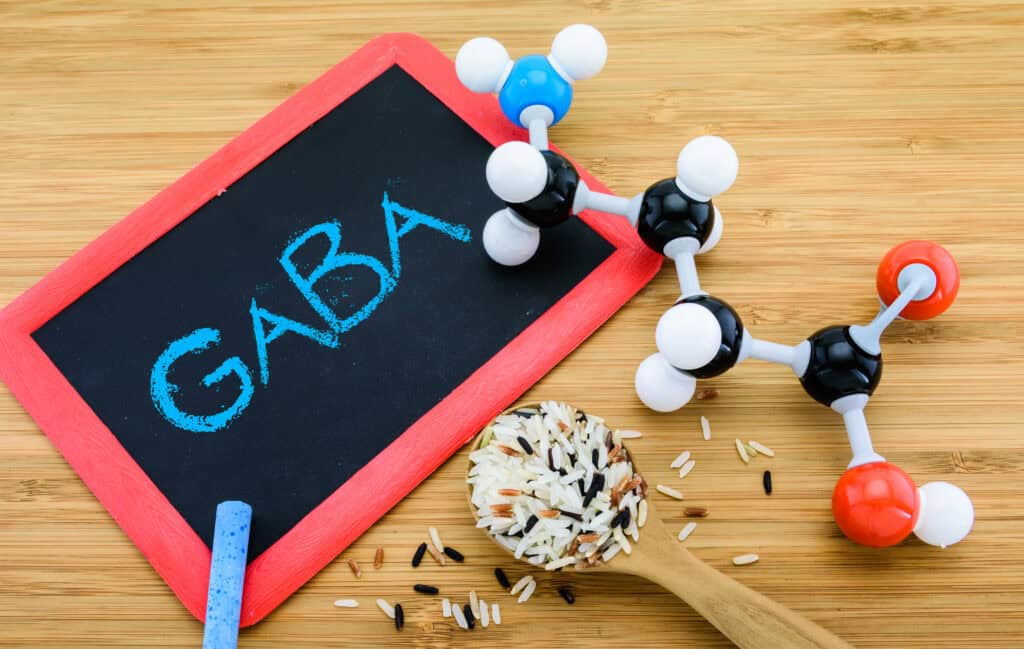
GABA – Gamma Aminobutyric Acid – is the brain’s natural calming chemical. While other brain chemicals fire up neural activity (keeping you alert, reactive, and switched on) GABA does the opposite: it slows things down, quietens neural firing, and reduces the overall level of activity in the nervous system.
GABA is produced naturally in the brain and is present throughout the central nervous system. It works by binding to GABA receptors on nerve cells, reducing their excitability and making them less likely to fire. The result is a considerable reduction in neurological activity – less mental noise, less physical tension, less of the alert, vigilant state that the nervous system defaults to under pressure.
This makes GABA fundamental to a wide range of functions: mood regulation, anxiety management, muscle relaxation, and the transition from wakefulness into sleep [1].
How GABA Controls the Transition Into Sleep
Sleep onset isn’t a passive process. It doesn’t happen simply because you’re tired or the lights are off – it requires the brain to actively shift from a state of wakefulness into the slower, quieter state that sleep needs to take hold.
GABA is what makes that shift possible.
As the body prepares for sleep, GABA activity increases across key regions of the brain, dialling down mental activity and allowing the high-alert brain waves of wakefulness to give way to the slower, calmer waves associated with drowsiness and sleep onset.
Once asleep, GABA keeps working – helping the brain stay in the deeper, more restorative stages rather than pulling back toward wakefulness. The deepest, most physically restorative stage of sleep is also the stage with the highest GABA activity [3].
Put simply: GABA doesn’t just help you fall asleep. It helps you stay asleep and sleep deeply. When GABA activity is where it should be, the brain can do its nightly repair work and deliver the kind of rest that leaves you genuinely refreshed. When it isn’t, the whole night suffers.
GABA and Anxiety: Why They’re More Connected Than You Think
If your sleep is worse on the nights your anxiety is highest – or the same mind that races at bedtime also tends toward worry during the day – there’s a reason for that pattern.
GABA and anxiety are closely linked. When GABA activity is low, the nervous system becomes more reactive and harder to calm – it gets stuck in a state of low-level alert that makes both anxiety and sleep problems more likely. Research has consistently found lower GABA levels in people with anxiety disorders [4], and that same deficit is what keeps the brain switched on at night when it should be winding down.
This is also why anxiety and poor sleep so often go hand in hand – they share the same underlying cause.
It’s worth noting that many widely prescribed sleep and anxiety medications work specifically by enhancing GABA activity in the brain – which speaks to just how central this system is to both conditions.
What Happens When GABA Is Low
GABA insufficiency doesn’t announce itself with a label. It shows up as a cluster of experiences that many people simply accept as their baseline – not realising that what they’re living with has a specific neurological explanation.
Low GABA activity is associated with [1, 4]:
- Difficulty falling asleep despite physical tiredness
- A racing or overactive mind at bedtime
- Waking frequently during the night
- Light, easily disrupted sleep
- Heightened stress reactivity and a tendency toward worry
- Muscle tension that doesn’t fully release even at rest
- A general sense of being “wired but tired” – unable to fully relax
These experiences are remarkably common – particularly among adults navigating the accumulated demands of midlife, hormonal changes, or chronic low-level stress. And while they’re often attributed to lifestyle or personality, the underlying neurological picture is frequently one of a GABAergic system that isn’t firing as effectively as it should.

Low GABA, Poor Sleep: What Brain Imaging Reveals
The link between GABA and sleep quality is well evidenced – and the research is striking.
A landmark study by researchers at Harvard Medical School directly measured GABA levels in the brains of people with primary insomnia using advanced brain imaging. The findings were clear: insomnia sufferers had around 30% lower GABA levels than healthy sleepers [5]. This wasn’t a lifestyle correlation – it was a direct measurement of a neurochemical deficit in the sleeping brain.
Research has also shown that the gradual decline in sleep quality most adults experience from midlife onward is partly explained by a natural reduction in GABA activity with age [6] – which helps explain why the deep, uninterrupted sleep that came easily at 25 becomes harder to achieve at 45, 55, and beyond.
Supporting Healthy GABA Function Naturally
The good news is that GABA activity isn’t fixed. It responds to some surprisingly simple inputs:
Move regularly. Exercise has been shown to meaningfully increase GABA activity in the brain – even moderate, consistent movement makes a difference [7].
Wind down deliberately. Slow breathing, yoga, and structured relaxation practices have all been shown to increase GABA activity. One study found a single yoga session produced a 27% increase in brain GABA levels compared to a walking session of the same duration [8].
Watch your caffeine. Caffeine reduces GABA activity, keeping the nervous system in a more excitable state. Cutting back – particularly in the afternoon and evening – directly supports the brain’s ability to calm down as the day progresses.
L-Theanine, PeptiSleep™ and the Fuller Picture
Two natural compounds are worth knowing about as complements to healthy GABA function.
L-Theanine – the amino acid found naturally in green tea – has been shown to increase both GABA levels and alpha-wave brain activity, the relaxed mental state associated with the transition toward sleep [9]. It doesn’t sedate – it supports the brain’s own shift into a calmer state, working alongside GABAergic activity rather than replacing it. The combination of GABA and L-Theanine is particularly well-studied, with research suggesting a synergistic effect on sleep quality that exceeds either compound alone [10].
PeptiSleep™ – the patented bioactive peptide from brown rice protein – completes the picture by addressing sleep architecture directly. Where GABA and L-Theanine support the neurological conditions that allow sleep to begin and deepen, PeptiSleep™ supports the depth and quality of the sleep stages themselves – the slow-wave deep sleep and REM cycles that determine how restored you actually feel in the morning. Together, these three compounds address sleep from the neurological ground up: calming the system, supporting the transition, and sustaining the architecture that restorative sleep depends on.
The Brain That Won’t Switch Off
If you recognise the experience this article opened with – the exhausted body, the racing mind, the frustrated wait for sleep that won’t come – it’s worth knowing that it has a name, a mechanism, and a meaningful set of solutions.
GABA insufficiency is not a character flaw or a consequence of overthinking. It’s a neurological state – one that can be influenced, supported, and in many cases meaningfully improved. Understanding the brain chemistry behind your sleep is the first step toward changing it.
The brain that won’t switch off isn’t broken. It’s simply waiting for the right conditions to do what it’s designed to do. Supporting GABA is one of the most direct ways to provide them.
Article Summary
What Is GABA – And Why This Brain Chemical Holds the Key to Deep, Restorative Sleep?
- GABA (Gamma Aminobutyric Acid) is the brain’s primary inhibitory neurotransmitter – the nervous system’s natural braking system. Its job is to slow down and quieten neurological activity, creating the conditions the brain needs to transition from wakefulness into sleep.
- Without sufficient GABA activity, the brain struggles to disengage. Thoughts race, the body feels tired but wired, and the transition into sleep becomes a battle rather than a natural process.
- GABA and anxiety are closely connected. Low GABAergic activity is associated with both anxiety and sleep onset difficulty – which is why the two so often appear together and why addressing GABA function can support both.
- The research is clear. Studies including brain imaging work from Harvard-affiliated researchers found that people with primary insomnia have measurably lower GABA levels than healthy sleepers – pointing to GABA insufficiency as a meaningful neurological driver of poor sleep.
- GABA function can be supported naturally – through diet, lifestyle practices, and targeted nutritional compounds. L-Theanine and PeptiSleep™ both support the neurological conditions that healthy GABA activity helps create.


Does Organixx sell the product Pepti Sleep? Does this product contain both GABA and L-Theanine. What foods besides green tea can I take to increase GABA?
Can she help me with diabetes insipidus