



The Two Things Your Body Needs More of After 40 – And Why Most People Are Only Getting One
This article discusses emerging/ongoing science and research. It is intended for general informational purposes only. This content is unrelated to products offered by Organixx and does not contain any representations about the performance of such products.
In a hurry? Click here to read the Article Summary
Most people who take collagen know why they’re taking it. The research is well established, the benefits are visible, and the supplement category has been mainstream long enough that the conversation around skin, joints, and healthy aging feels familiar.
Creatine is a different story. Despite being one of the most extensively studied compounds in nutritional science, it remains largely off the radar for the health-conscious adults who might benefit from it most. It got pigeonholed early as a gym supplement – and for a lot of people, that’s where the story ended.
Here’s what that assumption is costing them.
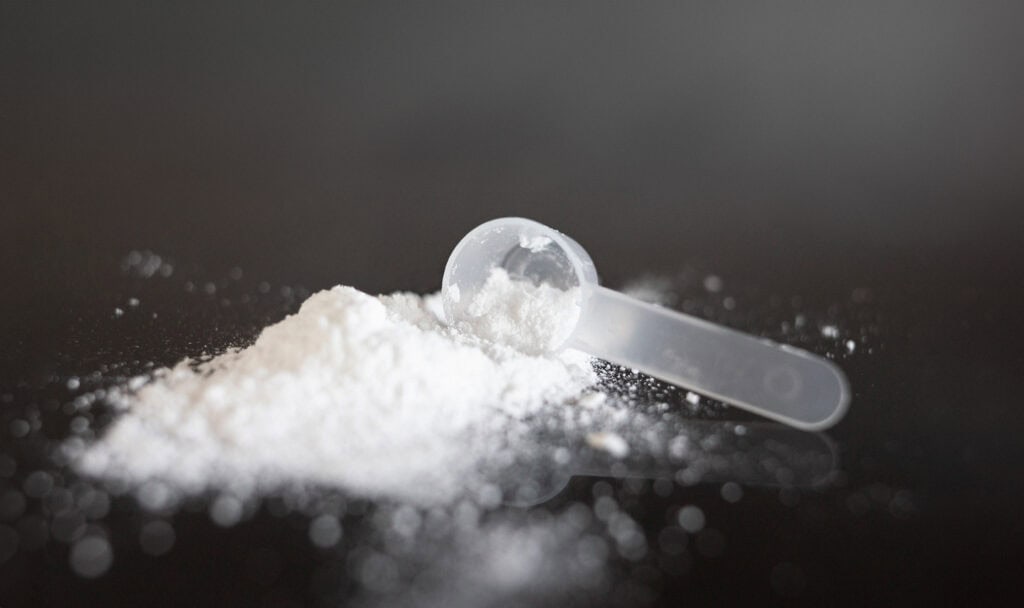
Two Systems, Declining in Parallel
After 40, two things happen in the body that rarely get discussed together, but probably should.
The first is well known: collagen production declines. Starting in the mid-30s and accelerating after 40, the body produces progressively less of the structural protein that gives skin its firmness, cushions joints, supports bone density, and holds connective tissue together.
Research published in the British Journal of Dermatology found that skin collagen content decreases by approximately 1% per year from early adulthood – a slow erosion that compounds significantly over time [1].
The second decline is less talked about, but equally predictable: creatine levels drop too. The body’s capacity to synthesize creatine naturally decreases with age, and most adults don’t eat enough of the primary dietary sources – red meat and oily fish – to compensate. Studies show that muscle creatine stores in older adults are measurably lower than in younger populations, contributing to the well-documented decline in strength, energy, and recovery capacity that comes with age [2].

These two declines are happening simultaneously, in systems that depend on each other. Muscles attach to bones through tendons and ligaments made of collagen. Joints cushioned by collagen-rich cartilage are moved by muscles powered by creatine-dependent energy.
When both are in short supply, the effects show up across the body – and they compound each other.
What Collagen Decline Looks Like
Collagen is the most abundant protein in the human body, accounting for roughly a third of total protein content. Its role isn’t cosmetic – it’s structural. Collagen forms the scaffolding of skin, the matrix of bone, the cushioning of cartilage, the strength of tendons and ligaments, and the lining of the gut.
As production slows, the downstream effects are gradual but cumulative:
Skin loses elasticity and density, developing fine lines and a texture that doesn’t bounce back the way it once did. This isn’t just surface-level – it reflects a genuine reduction in the collagen fibers that give skin its structural integrity.
Joints become less well-cushioned as cartilage thins and the connective tissue supporting joint movement loses some of its resilience. Many people notice this first as stiffness in the morning, or a longer recovery period after physical activity.
Bones rely on a collagen matrix for their structural flexibility – the quality that allows bone to absorb impact rather than fracture under load. Declining collagen is one of the factors contributing to reduced bone density with age.
Gut health is also affected, as the collagen-rich lining of the digestive tract becomes less robust over time.
A 2021 systematic review in the International Journal of Dermatology found that hydrolyzed collagen supplementation produced statistically significant improvements in skin elasticity, hydration, and collagen density in women over 35 [3]. Joint outcomes have been similarly well studied: a 24-week randomized controlled trial found meaningful improvements in joint comfort and function in adults who supplemented with collagen daily [4].
What Creatine Decline Looks Like
Creatine’s decline shows up differently, but is no less consequential.
Creatine is stored in muscle tissue as phosphocreatine, where it powers the rapid regeneration of ATP – the molecule that fuels cellular activity. Muscles, neurons, and organs all run on ATP. When phosphocreatine stores are lower, the body’s ability to regenerate ATP quickly is compromised – and that has real effects on how you feel and function day to day.
Muscle mass and strength are the most visible consequences. Without adequate creatine to support efficient energy production, muscles fatigue more easily and recover more slowly. Combined with the natural hormonal shifts of aging, this accelerates the gradual loss of lean muscle mass that begins in the 30s and picks up pace after 50.
Energy levels – not just during exercise, but throughout the day – reflect the same underlying mechanism. Cellular energy production runs less efficiently, and the gap between the energy demands of daily life and the body’s capacity to meet them quietly widens.
Cognitive sharpness is an area where creatine’s decline is perhaps least expected, but increasingly well supported by research. The brain is one of the most energy-hungry organs in the body, consuming a disproportionate share of ATP relative to its size. A 2021 review in Nutrients found that creatine supplementation was associated with meaningful improvements in memory recall and cognitive performance, particularly in older adults [5].
A meta-analysis examining creatine supplementation in older adults found consistent improvements in lean muscle mass, functional strength, and exercise performance compared to controls – with the researchers noting that the effects were most pronounced in populations over 55 [2].

The Gap Most People Don’t Know They Have
Collagen supplementation has become genuinely mainstream. The market has grown, the research is widely cited, and most health-conscious adults over 40 have at least considered it.
Creatine hasn’t made the same crossover – not yet. Despite the fact that its research base is, if anything, even more extensive than collagen’s, it remains associated in most people’s minds with a demographic and a use case that doesn’t describe them.
The result is that a lot of people are addressing one half of the equation while the other half quietly worsens. They’re supporting the structural side – skin, joints, connective tissue – while the energy side goes unsupported. Or they’re aware of creatine but assume it isn’t relevant to them.
Both assumptions have real costs.

Why Addressing Both Matters
The case for collagen after 40 is well established. It provides the structural amino acids – particularly glycine, proline, and hydroxyproline – that the body uses to maintain and repair collagen-rich tissues. As natural production slows, supplementation with hydrolyzed collagen peptides offers a direct and well-researched way to support the structural systems that collagen decline affects.
The case for creatine is equally clear, and arguably underappreciated for this audience. It supports muscle maintenance in a population experiencing accelerated muscle loss. It supports cognitive function in people who are noticing real changes in energy and mental sharpness. And because women naturally have lower creatine stores than men to begin with – around 70–80% of male baseline levels – the gap created by age-related decline is proportionally larger for them [6].
Together, collagen and creatine address the two systems that aging affects most predictably and most consequentially: the structural integrity of the body’s tissues, and the cellular energy that keeps them functioning. Supporting one while neglecting the other is a reasonable starting point. Supporting both is a more complete response to what the body actually needs.
The Foundation Hiding in Plain Sight
Collagen’s reputation as a healthy aging essential is well earned. But the conversation that’s been missing – the one that adds creatine to it – reflects where the research has been pointing for some time.
The adults who are paying attention to both are getting ahead of two of the most predictable age-related declines in the body. That’s not a complicated wellness strategy. It’s a straightforward one, backed by decades of science, that most people are only halfway through.
Article Summary
The Two Things Your Body Needs More of After 40 – And Why Most People Are Only Getting One
- Collagen and creatine both decline with age – and they do so in parallel, in systems that are biologically interdependent.
- Collagen decline affects skin elasticity, joint cushioning, bone density, and connective tissue integrity. Research supports hydrolyzed collagen supplementation for measurable improvements in skin and joint outcomes.
- Creatine decline affects muscle mass, everyday energy levels, and cognitive function. Research consistently supports creatine supplementation in older adults for lean muscle maintenance, strength, and memory.
- Collagen supplementation is now mainstream; creatine supplementation for healthy aging is not – yet. Most people are addressing only one of these two well-documented declines.
Women are particularly affected: natural creatine stores in women are approximately 70–80% of men’s baseline, meaning age-related decline has a proportionally greater impact.


Comments