



The Collagen-Creatine Connection: Why Your Body Thrives When It Has Both After 40
This article discusses emerging/ongoing science and research. It is intended for general informational purposes only. This content is unrelated to products offered by Organixx and does not contain any representations about the performance of such products.
In a hurry? Click here to read the Article Summary
Your body is building and rebuilding itself constantly – every hour of every day, long after you stop paying attention to it.
It repairs tissue. It regenerates cells. It maintains the scaffolding that holds your skin, joints, muscles, and connective tissue together.
For all of that to work the way it should, two things need to happen simultaneously:
- Your body needs the raw materials to carry out repairs, and
- It needs the energy to actually do the job.
After 40, both of those things start to quietly slip away. And that’s where the story of collagen and creatine gets interesting.

Two Compounds, One Purpose
Most people who’ve heard of collagen associate it with skin – and they’re right. Collagen is the most abundant protein in the human body, which also forms the structural scaffolding of joints, bones, tendons, ligaments, and connective tissue throughout the body.
Creatine is more likely to conjure images of gym bags and protein shakes. But that association, while not wrong, dramatically undersells what creatine actually does. Creatine is a naturally occurring compound – synthesized in the liver and kidneys from the amino acids arginine, glycine, and methionine – that plays a central role in cellular energy production.
These two compounds don’t just support different parts of the body. They operate in a deeply interconnected way, where one provides the structural blueprint and the other provides the power to execute it.
Understanding that connection is the key to understanding why both matter – and why, after 40, the gap left by declining levels of each becomes increasingly difficult to ignore.
Collagen: The Body’s Structural Protein

The word “collagen” comes from the Greek kolla, meaning glue. Collagen is, in a very literal sense, the substance that holds your body together.
It’s found in skin, where it provides tensile strength and elasticity. In joints, where it forms the cartilage that cushions bone-to-bone movement. In bones themselves, where it creates the flexible matrix that allows bone to absorb impact without shattering. In tendons and ligaments, which connect muscle to bone and bone to bone. Even in blood vessels, the gut lining, and the corneas of the eyes.
What makes collagen particularly interesting is that it isn’t one thing – it’s a family of proteins. Scientists have identified at least 28 distinct types, though five are considered most relevant to everyday health:
Type I is the most abundant in the human body and is the primary structural component of skin, tendons, ligaments, bones, and teeth. It’s the type most associated with skin firmness and wound healing.
Type II is found predominantly in cartilage and is central to joint health and flexibility.
Type III is often found alongside Type I and is particularly important for the structure of muscles, blood vessels, and organs.
Type IV forms the basement membranes – the thin layers of structural support underlying skin cells and lining blood vessels and organs.
Type X plays a role in the formation of new cartilage during bone growth and repair, and is associated with joint health and recovery.
Collagen production requires specific nutritional co-factors to proceed: vitamin C, silica, and zinc are among the most important. Without them, the body cannot efficiently assemble new collagen fibers even when the raw amino acids are available.
What Happens to Collagen After 40
Collagen production begins declining in early adulthood. By the time most people reach their mid-30s, the body is already producing measurably less collagen each year. After 40, that decline accelerates.
Research published in the American Journal of Pathology found that skin collagen content decreases by approximately 1% per year from early adulthood – a slow, cumulative decline that adds up significantly over decades [1]. By the time someone reaches their 60s, they may have lost 30% or more of the collagen density they had in their 20s.
This shows up in visible ways: in skin that gradually loses its firmness and develops fine lines, in joints that begin to feel less cushioned and more resistant, in nails that become more brittle, in connective tissue that recovers more slowly from the demands of daily life.
But what’s often overlooked is that collagen decline also affects the tissues that don’t show in the mirror – the tendons and ligaments that stabilize joints, the gut lining that supports digestion, and the bone matrix that provides structural integrity beneath the surface.
Creatine: The Energy Currency of Your Cells
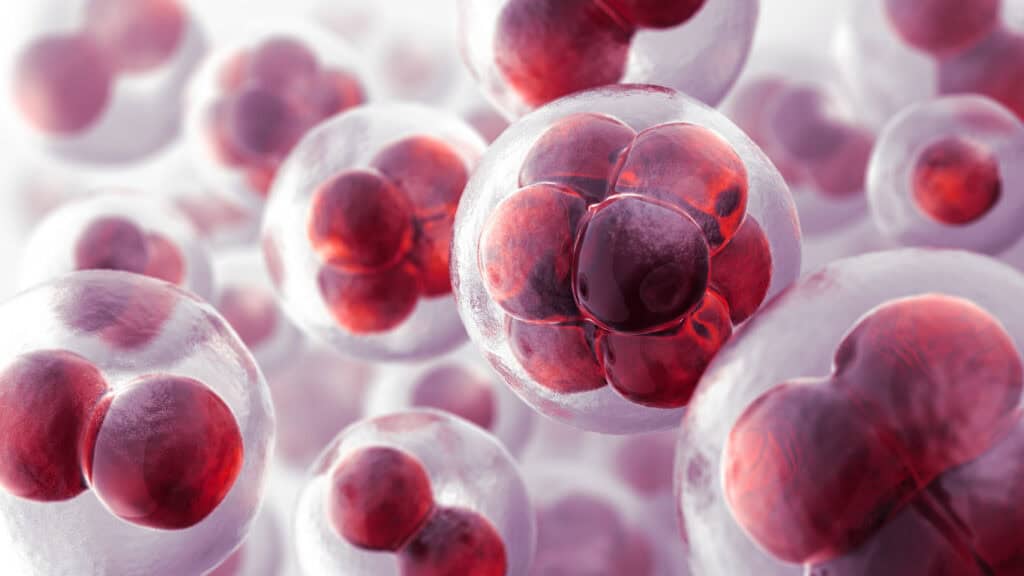
Every cell in your body runs on adenosine triphosphate, or ATP – a molecule that acts as the primary currency for cellular energy. When a cell needs to do work – whether that’s a muscle contracting, a neuron firing, or a tissue being repaired – it burns ATP to do it. The problem is that your cells can only store a very small amount of ATP at any given time. For high-demand, rapid-fire activities, the body needs a way to regenerate ATP quickly.
That’s where creatine comes in.
Creatine is stored in muscle tissue primarily in the form of phosphocreatine. When ATP is used up during intense or sudden activity, phosphocreatine donates its phosphate group to regenerate ATP almost instantly. This keeps cellular energy available for the continued work at hand.
The implications extend well beyond the gym. Muscles need ATP to contract during any physical activity, from a workout to walking up the stairs to lifting groceries. But the brain is also one of the most energy-intensive organs in the body, relying heavily on a consistent supply of ATP to support cognitive processing, memory consolidation, and overall mental clarity.
A 2021 review published in Nutrients examined the growing body of research on creatine and brain health, noting that creatine supplementation has been associated with improved cognitive performance, particularly in older adults and in situations involving mental fatigue or stress [2].
The Parallel Decline – And Why It Matters
After 40, both collagen and creatine levels follow a similar trajectory: downward.
The body’s capacity to synthesize creatine naturally declines with age, and dietary sources of creatine – found primarily in red meat and fish – are often insufficient to maintain optimal tissue levels in older adults. Studies suggest that natural creatine stores in muscle tissue can be meaningfully lower in older adults compared to younger populations, contributing to the well-documented decline in muscle mass, strength, and exercise recovery that comes with aging [3].
At the same time, collagen synthesis is slowing down, weakening the connective tissue and cartilage that the body depends on to support the muscular and skeletal system.
This dual decline creates a compound effect. Muscles that need creatine to generate energy are attaching to tendons and ligaments made of collagen. Joints cushioned by cartilage made of collagen are being moved by muscles powered by creatine. The two systems don’t just run in parallel – they depend on each other.

When both are declining simultaneously, the consequences can show up across multiple areas: diminished muscle endurance, reduced joint comfort, slower recovery from physical activity, decreased energy, and changes in cognitive sharpness that many people attribute simply to “getting older.”
Where They Work Together: The Synergy of Structure and Energy
Here’s what makes the collagen-creatine connection more than just two supplements taken at the same time.
Creatine supports the energy demands of the cellular processes involved in tissue repair and protein synthesis – including the energy-intensive work of rebuilding and maintaining collagen-rich tissues. Tendon and ligament healing, cartilage maintenance, and skin cell renewal all require ATP. More available creatine means more energy to power those repair processes.
Separately, research on creatine and muscle recovery has consistently shown that adequate creatine availability supports faster restoration of muscle function after exertion – which matters more and more as recovery windows naturally lengthen with age [5].
Together, these two compounds address the aging body’s most fundamental needs: the materials to rebuild, and the energy to do the rebuilding.

What the Research Shows
The evidence for both compounds is robust and specific. A 2021 systematic review published in the International Journal of Dermatology found that hydrolyzed collagen supplementation produced statistically significant improvements in skin elasticity, hydration, and collagen density – with results most pronounced in women over 35 [6]. For joints, a 24-week randomized controlled trial found that daily collagen supplementation significantly improved functional joint scores in older adults [7].
For creatine, a comprehensive review in the Journal of Strength and Conditioning Research examined outcomes specifically in older adults and found consistent improvements in lean muscle mass, strength, and functional performance [8]. Cognitive outcomes – memory, processing speed – showed particular promise, building on the same ATP-support mechanism that drives creatine’s physical benefits.

Supporting Both After 40
Both collagen and creatine decline with age, and both can be meaningfully supported through supplementation. For collagen, hydrolyzed peptides are the most bioavailable form. For creatine, monohydrate remains the gold standard: the most studied, most validated, and most consistently effective form across decades of research.
The Bigger Picture
The changes that tend to show up after 40 – in skin, joints, muscle, energy, and mental sharpness – are often written off as inevitable. Some are. Many aren’t.
Collagen and creatine are two of the most rigorously studied compounds in nutritional science, and the case for addressing both together is built on a clear biological rationale: your body needs the materials to rebuild, and the energy to do it. When both are in short supply, the effects compound. When both are supported, so does everything else.
Article Summary
The Collagen-Creatine Connection: Why Your Body Thrives When It Has Both After 40
- Collagen is the body’s primary structural protein, forming the framework of skin, joints, bones, tendons, and connective tissue. Collagen production declines by approximately 1% per year from early adulthood.
- Creatine is a compound that powers cellular energy production (ATP regeneration) in muscles and the brain. Natural creatine levels also decline with age.
- The two compounds are complementary: collagen provides the structural materials the body needs to maintain and repair its tissues; creatine provides the cellular energy to carry that work out.
- Research supports both compounds individually for skin quality, joint health, muscle maintenance, and cognitive function – and the biological rationale for their combined use in healthy aging strategies is well established.
- Both can be supported through diet (bone broth, meat, fish) and supplementation. For supplementation, hydrolyzed collagen peptides and creatine monohydrate are the most evidence-backed forms.


Is creatinine in your collagen?
Hi Donna, thanks for your question. We appreciate your interest in our products.
We do carry a collagen product with creatine. Our Clean Sourced Collagens + Creatine formula includes creatine to help support lean muscle mass and cellular energy alongside our clean collagen peptides. We use high-quality, pure ingredients without synthetic fillers or additives.
Feel free to check out the product page via our website for all the details. The product is linked in the article above. Alternatively, you can also go here: https://shop.organixx.com/products/clean-sourced-collagens-creatine
We hope this helps and that you decide to give it a try. Cheers to your good health.
What is/are the source/s of your collagen? Are the animals organically raised? No growth hormones!
Please advise
Steven Fryer
Hi, Quick question do you have B2B Invoices your customers are not paying you on?
We can help get you paid on them
Please let me know.
Thanks, Tom West