


Omega-7 for Skin Hydration and Elasticity: Supporting Beauty From Within
This article discusses emerging/ongoing science and research. It is intended for general informational purposes only. This content is unrelated to products offered by Organixx and does not contain any representations about the performance of such products.
Your skin is telling you something. Those fine lines that weren’t there a few years ago, the dryness that no moisturizer seems to fully fix, the loss of that plump, elastic quality that skin has when it’s truly healthy – these aren’t just surface-level changes. They’re signals from the inside out.
When it comes to skin health, the most effective approach works on both levels. What you apply to your skin matters – the right ingredients, used consistently, can make a real and visible difference. But what you feed your skin from within matters just as much. True skin health is the result of both working together: quality topical care supported by the right internal nutrition.
That’s where omega-7 comes in. It’s a fatty acid you’ve probably never heard of – and one that’s quietly accumulating some of the most compelling skin health research in nutritional science. Understanding what it does, and why, might be the missing piece in your approach to healthy, radiant skin.

What Is Omega-7 – And Why Haven’t You Heard of It?
Omega-7 is a monounsaturated fatty acid. Its full name is palmitoleic acid, and unlike the omega-3s and omega-6s that dominate most nutrition conversations, omega-7 has flown largely under the radar – despite being present in every cell membrane in your body.
The reason it’s been overlooked is partly historical. Research into omega fatty acids has focused heavily on omega-3s and omega-6s for decades, leaving omega-7 in the background. That’s changing. Over the past two decades, more than 50 pre-clinical and clinical studies have been published on omega-7’s effects on the body – and the skin health findings in particular are turning heads.
Omega-7 is found naturally in a handful of sources. Sea buckthorn berry oil is one of the most well-known plant sources. Macadamia nut oil contains it in smaller amounts. And cold-water fish – particularly certain species from pristine northern waters – are among the richest and most concentrated marine sources available.
It’s worth noting that not all omega-7 sources are equally potent. Concentration matters significantly when it comes to achieving the levels studied in clinical research. More on that shortly.
What Omega-7 Does for Your Skin
To understand why omega-7 matters for skin health, it helps to understand what’s actually happening inside skin tissue as we age.
Skin is made up of multiple layers. The outermost layer – the epidermis – acts as a barrier, keeping moisture in and environmental damage out. Beneath it, the dermis contains the structural proteins that give skin its firmness and elasticity: primarily collagen and elastin. Both of these structures depend on a steady supply of the right nutrients to maintain themselves.
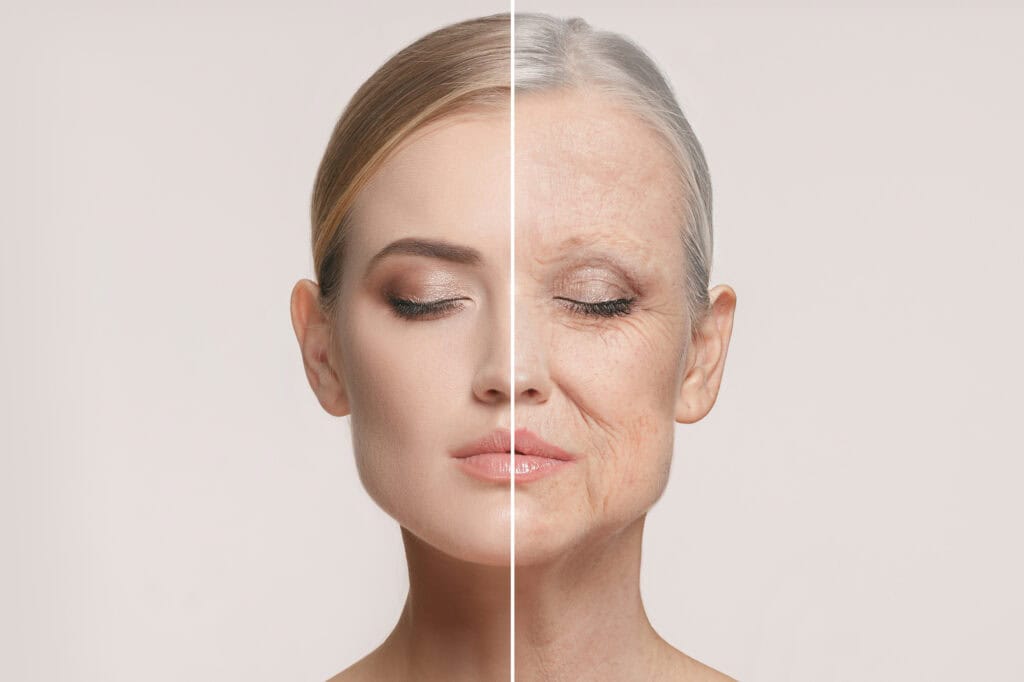
But from our mid-twenties onward, the body’s ability to produce collagen begins to decline. Simultaneously, the skin’s natural moisture retention mechanisms become less efficient. The result, over time, is the classic pattern of skin aging: reduced elasticity, increased dryness, and the gradual appearance of fine lines and wrinkles.
Omega-7 appears to work on several of these mechanisms at once.
Laboratory research published in Applied Biological Chemistry has shown that palmitoleic acid plays a role in activating SIRT1 – a protein sometimes called a “longevity gene regulator” that is involved in cellular repair and the maintenance of skin tissue. The same research found that omega-7 inhibits MMP-1, an enzyme that breaks down collagen in the skin [3].
In simple terms: Omega-7 helps protect the collagen you have while supporting the conditions for new collagen to form.
Omega-7 also plays a direct role in skin hydration. It supports the integrity of the skin barrier – the structure responsible for keeping moisture locked in – and has been linked to measurable reductions in trans-epidermal water loss, which is the rate at which the skin loses moisture to the environment [1].
What the Research Actually Shows
The science here is more specific than you might expect for a lesser-known nutrient – and the results are worth looking at closely.
A 2024 clinical study published in the journal Nutrients followed 101 women over 12 weeks of omega-7 supplementation derived from Alaska Pollock fish oil [1]. The researchers measured multiple markers of skin health at 4, 8, and 12 weeks.
The results showed statistically significant improvements in skin moisture levels, skin elasticity, and wrinkle appearance – all compared to a placebo control group.
What makes this study particularly noteworthy is the source of the omega-7 used. Alaska Pollock-derived omega-7 is significantly more concentrated in palmitoleic acid than most other sources – including sea buckthorn and macadamia nut oil. The researchers used a highly concentrated form, which is likely a key factor in the consistency of the results.

Earlier research supports this picture. The AlaskOmega research database – which includes studies conducted since 2000 – documents improvements in skin hydration and reductions in trans-epidermal water loss across multiple studies [2]. The pattern across this body of research is consistent: omega-7 supplementation, at meaningful concentrations, produces measurable improvements in the skin markers most associated with youthful, healthy skin.
Skin Hydration: More Than Skin Deep
It’s easy to think of skin hydration as a cosmetic concern – something you address with a good moisturizer and move on. But skin hydration is actually a marker of skin health at a structural level.
When the skin barrier is functioning well, it retains moisture efficiently, recovers environmental stress more readily, and maintains the plump, resilient quality that reflects genuinely healthy tissue. When it’s compromised – through aging, environmental exposure, nutritional deficiency, or a combination of all three – the signs show up quickly: tightness, flakiness, increased sensitivity, and the kind of dryness that topical products can mask but not truly correct.
This is why addressing skin hydration from within works so powerfully alongside a good topical skincare routine. A quality moisturizer works at the surface to replenish and protect. Omega-7 works at the level of the skin barrier itself – supporting the cellular structures that determine how well your skin holds onto moisture in the first place. Together, they address skin hydration from both directions.
Elasticity, Collagen, and the Aging Skin
Of all the changes that come with skin aging, the loss of elasticity is often the one people notice first – and feel most frustrated by. That bounce-back quality that skin has in youth isn’t just aesthetic. It reflects the integrity of the collagen and elastin network running through the dermis.
Collagen production naturally declines with age – and that decline accelerates in the presence of certain enzymes, including MMP-1, which actively breaks collagen down. Environmental factors – UV exposure, pollution, chronic stress – all upregulate MMP-1 activity, compounding the natural aging process.
Laboratory research has shown omega-7’s ability to inhibit MMP-1 is directly relevant here. By helping to slow the breakdown of existing collagen, it supports the structural integrity of the dermis from within. Combined with its role in SIRT1 activation – which supports cellular repair and regeneration – omega-7 addresses two of the key biological mechanisms driving the visible signs of skin aging [3].

The 2024 Nutrients study captured this effect directly. Skin elasticity values in the supplemented group improved significantly compared to placebo at both 8 and 12 weeks – with the improvements continuing to build over the course of the study, suggesting a cumulative effect with sustained supplementation [1].
Understanding why omega-7 works is one thing. Knowing what to look for in a supplement is another.”
Source and Concentration: Why They Matter
Not all omega-7 supplements are equivalent, and this is one area where the details matter more than they might initially appear.
The concentration of palmitoleic acid varies dramatically across sources. Herring oil contains around 10% omega-7. Macadamia nut oil sits at approximately 17%. Sea buckthorn berry oil reaches around 31% – which is why it has historically been the most talked-about omega-7 source in natural health circles.
Highly concentrated Alaska Pollock-derived omega-7, however, can reach 50–70% palmitoleic acid content – making it up to seven times more potent than herring and significantly more concentrated than sea buckthorn [2][4]. This level of concentration allows for smaller, more practical capsule sizes while still delivering the amounts used in clinical research.
Sustainability is also worth considering when evaluating any fish oil supplement. Look for products sourced from fisheries certified by the Marine Stewardship Council (MSC) – an independent body that verifies sustainable fishing practices, traceability, and responsible ecosystem management.
Well-managed fisheries maintain low bycatch levels and operate under continuous government oversight, which matters both environmentally and as a quality signal. Where a fish oil comes from, and how carefully it’s handled from catch to capsule, is part of what separates a genuinely clean supplement from one that simply claims to be.
What to Look for When Choosing an Omega-7 Supplement
If you’re considering omega-7 supplementation for skin health, a few factors are worth paying attention to.
First, concentrate. Given the wide variation in palmitoleic acid content across sources, check that the product specifies the omega-7 content per serving – not just the total oil amount. A higher concentration means you’re more likely to reach the levels that have shown results in clinical studies.
Second, source transparency. Look for a product that clearly identifies where the omega-7 is derived from and whether the source is independently certified for sustainability and purity.
Third, consistency. The research on omega-7 for skin health shows improvements building over 8 to 12 weeks of regular supplementation. This isn’t a nutrient that delivers overnight results – it works gradually at a structural level. Consistency over time is what evidence supports.
Where to Go from Here
Healthy, hydrated, elastic skin isn’t just a matter of what you put on it. It reflects what’s happening inside – at the level of cell membranes, collagen networks, and the biological processes that keep skin tissue functioning well.
Omega-7 – specifically palmitoleic acid from a concentrated marine source – is emerging as one of the most promising nutritional tools for supporting skin health from within. The research points consistently to improvements in the markers that matter most: moisture retention, elasticity, and the reduction of fine lines and wrinkles, with benefits that build meaningfully over time.

If you’ve been looking for a way to support your skin that goes beyond the surface, omega-7 is a conversation worth having with your body.


Comments