


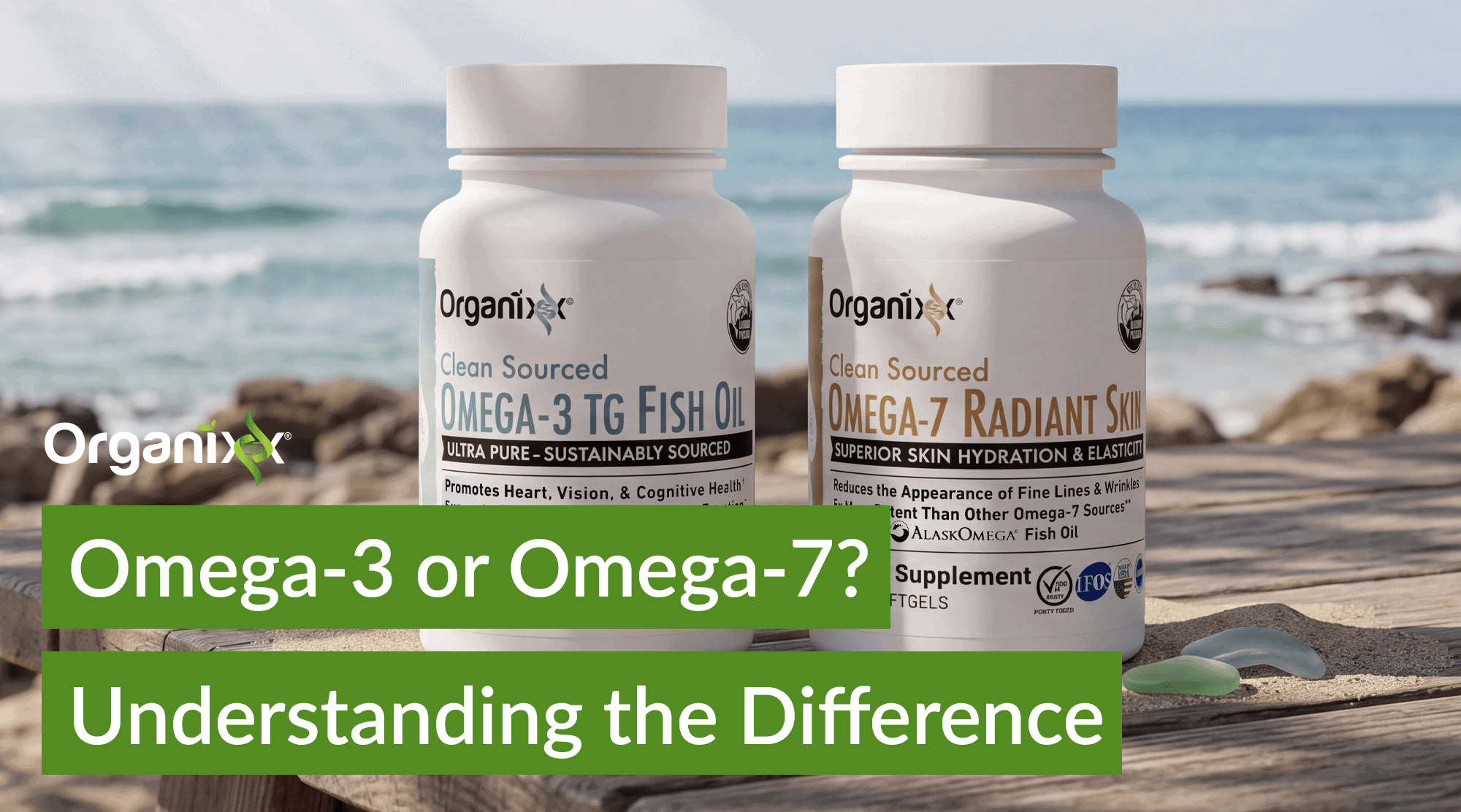
Omega-3 or Omega-7? Understanding the Difference
This article discusses emerging/ongoing science and research. It is intended for general informational purposes only. This content is unrelated to products offered by Organixx and does not contain any representations about the performance of such products.
In a hurry? Click here to read the Article Summary
Omega-3 and Omega-7 sound like they should be close cousins – same naming convention, same fish oil aisle, same general “good fats” reputation. But beyond sharing a source, they do almost entirely different jobs in the body.
Understanding what each one actually does is the key to knowing which one belongs in your daily routine – or whether the answer is both.

Same Naming System, Different Fatty Acids
The “omega” numbering system refers to where a fatty acid’s chemical structure begins, not how strong or important it is. Omega-3 and Omega-7 are structurally distinct fatty acids that your body uses for entirely different purposes – one is a foundational nutrient for organs and systems throughout the body, and the other functions more like a targeted signaling lipid that influences skin health specifically.
Both, in Organixx’s case, are sourced from the same place: MSC-certified AlaskOmega®, from wild-caught Alaska pollock in the Bering Sea. Same clean sourcing standard, two very different nutrients.

Omega-3: Foundational, Whole-Body Wellness
Omega-3 fatty acids – specifically EPA and DHA – are among the most studied nutrients in nutritional science, with research spanning heart, brain, and vision health.
On the cardiovascular side, EPA has been studied extensively for its role in supporting healthy triglyceride levels and overall cardiovascular wellness; large clinical research, including the landmark REDUCE-IT trial, found that EPA supplementation was associated with a significant reduction in cardiovascular events in at-risk patients [1]. DHA, meanwhile, is concentrated in the brain and retina, where it supports focus, mental clarity, memory, and healthy vision – including comfort during heavy screen-time use.
Omega-3 is best suited for anyone whose primary goals are:
- Heart health and healthy circulation
- Brain performance, focus, and memory
- Vision health and eye comfort
- Immune function and healthy cell membranes
- A healthy inflammatory response supporting joint and tissue comfort

Omega-7: Targeted Skin Hydration and Elasticity
Omega-7 – palmitoleic acid – works differently. Rather than supporting broad systemic function, it acts as a signaling lipid that helps maintain the skin’s natural lipid barrier and hydration at the cellular level.
The clinical research here is specific and compelling: a randomized, double-blind, placebo-controlled study found that oral palmitoleic acid supplementation improved skin hydration and reduced the appearance of fine lines and wrinkles over a 12-week period [2].
Concentration matters significantly with Omega-7 – sources range from around 10% palmitoleic acid in herring oil up to 50-70% in concentrated Alaska pollock-derived oil, and sourcing plays an outsized role in whether a supplement actually delivers the levels used in clinical research. Omega-7 Radiant Skin uses concentrated AlaskOmega®, delivering 500mg of palmitoleic acid per serving – a concentration up to five times higher than herring oil sources.
Omega-7 is best suited for anyone whose primary goals are:
- Skin hydration and moisture retention from within
- Skin elasticity and firmness
- Reducing the appearance of fine lines and wrinkles
- Supporting the skin’s natural barrier function


Which One Should You Choose?
Omega-3 is a broad, foundational wellness nutrient supporting systems throughout the body – heart, brain, vision, immunity. Omega-7 is a targeted, beauty-from-within nutrient working specifically at the level of skin hydration and elasticity. They’re not competing for the same job; they’re simply not doing the same job at all.
If your primary goals are heart, brain, vision, and general internal wellness – Omega-3 is the foundational choice.
If your primary goals are skin hydration, elasticity, and the appearance of fine lines and wrinkles – Omega-7 is the more targeted choice.
Because they support such different systems in the body, many people choose to take both – covering whole-body wellness and skin health from within, using the same clean, sustainably sourced fish oil standard either way.
Article Summary
Omega-3 or Omega-7? Understanding the Difference
- Omega-3 and Omega-7 share a naming convention and a fish oil source, but support entirely different systems in the body
- Omega-3 (EPA/DHA) is a foundational, whole-body nutrient supporting heart, brain, vision, immunity, and a healthy inflammatory response
- Omega-7 (palmitoleic acid) is a targeted, beauty-from-within nutrient supporting skin hydration, elasticity, and the appearance of fine lines and wrinkles
- Concentration and sourcing matter significantly for Omega-7 – Organixx uses concentrated AlaskOmega® for clinically relevant palmitoleic acid levels
- The two aren’t competing – they support different systems entirely
- Choose Omega-3 for heart/brain/vision support; choose Omega-7 for skin hydration and elasticity; use both for whole-body wellness and skin health together



Comments